
Moving to Dallas-Fort Worth? Don't Make This Costly Mistake
The biggest mistake I see people make when they're relocating to Dallas-Fort Worth is not picking the wrong neighborhood or the wrong builder. It's picking a house that looks absolutely perfect online and then realizing after they've already closed that their actual life is 40 minutes in the opposite direction. Their job is 40 miles away. The airport they fly out of every week is 40 miles away. Their kids' activities are 40 miles away. The restaurants they actually like, the friends they thought they would see all the time, all 40 miles away.
In Dallas-Fort Worth, 40 miles is not just 40 miles. It can be an hour and a half. It can be hundreds of dollars a month in tolls. And if I'm being completely honest with you, it can change how you feel about living here altogether. That is what I call the 40-mile mistake, and the scary part is that most people do not even realize they've made it until after they've already closed on their house, enrolled their kids in school, and tried the commute a few times.
I've been helping people relocate to Dallas-Fort Worth for years. I specialize in the very far north Dallas corridor, Frisco, Plano, Prosper, Celina, McKinney, and I work with people moving here from all over the country who are trying to figure out where they actually belong in this huge Metroplex. In this blog, I'm going to take you through how to think about Dallas the right way: not just by looking at houses or school district rankings, but by looking at your actual life. Where you work, where you travel, where your kids will spend their time, which airport you use, and how all of that connects or doesn't connect on a map.
I call it the 40-mile mistake test, five questions I use with every relocation client before we ever start looking at houses. Answer them honestly and they'll tell you whether you're looking in the right part of DFW or whether you're about to make a very expensive lifestyle mistake. We're also going to cover Grapevine, Southlake, and Allen, because these underappreciated areas solve problems that the far north corridor can't.
Table of Contents
- Understanding Why Dallas-Fort Worth Confuses Relocators
- The Highway System and What It Means for Your Daily Life
- Airport Access: DFW vs Love Field and Why It Matters
- Frisco: The Marquee Name with Real Trade-Offs
- Plano: Established Convenience in the Corporate Corridor
- Prosper: The Sweet Spot Between Growth and Space
- Celina: More House, More Land, More Distance
- McKinney: Character and a Downtown That Hasn't Sacrificed Its Identity
- Grapevine: Underappreciated Central West Positioning
- Southlake: Airport Access and Established Luxury
- Allen: Strong Schools and Multi-Directional Highway Access
- Which Area Is Right for You: Mapping Your Actual Life
- Conclusion: Choose Your Life First, Then Choose the House
Understanding Why Dallas-Fort Worth Confuses Relocators
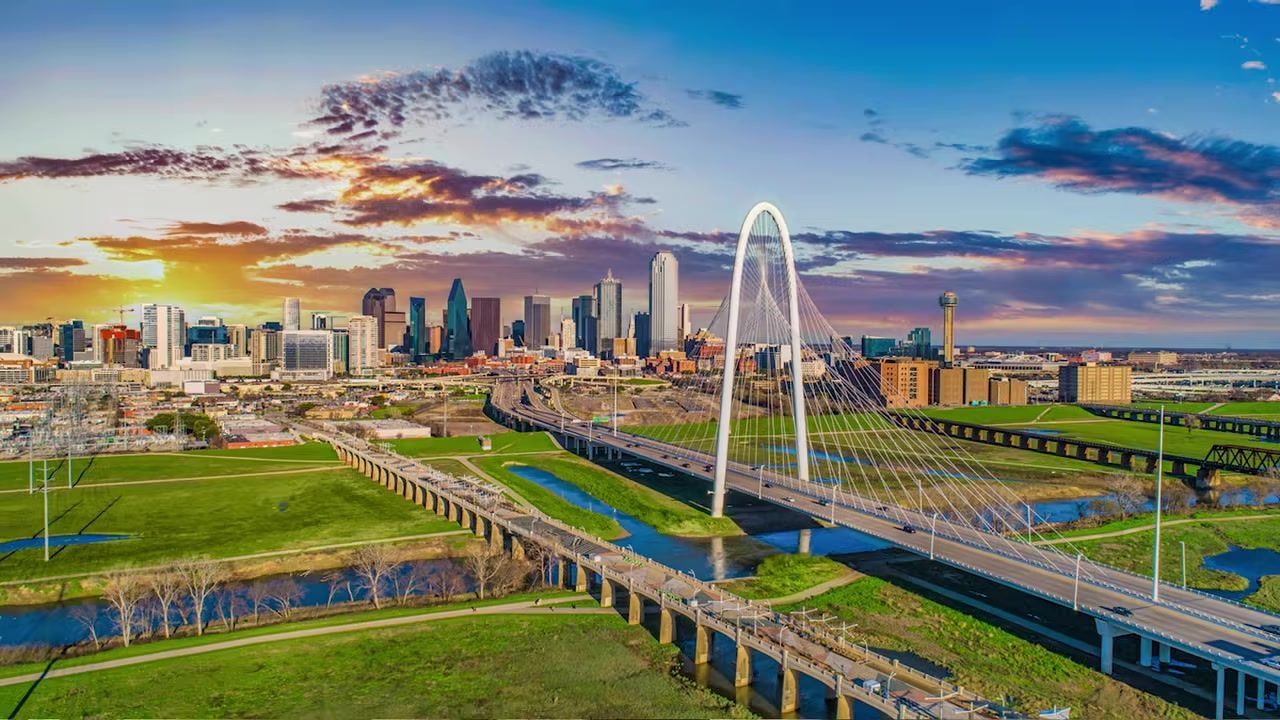
Look at the map. All of this is what people mean when they say Dallas. But this is not just Dallas. You have Dallas proper, Fort Worth, Frisco, Plano, McKinney, Prosper, Celina, Allen, Grapevine, Southlake, Irving, Las Colinas, and there are so many more. They all feel very different from each other. This is why Dallas is so confusing for people moving here from out of state. Someone will say we're moving to Dallas, and that could mean ten completely different lifestyles, ten completely different commutes, ten different daily rhythms.
You could be in a high-rise near downtown, a master-planned community in Frisco with a neighborhood pool, on acreage in Celina watching the sunset, or in an established Plano neighborhood with mature trees and great highway access. None of those lives are the same. When someone moves here without understanding that, they end up making the 40-mile mistake.
In a lot of cities, especially in the Northeast or the Midwest with a defined urban core, living in the suburbs carries a general meaning. You're maybe 20 to 30 minutes from downtown, reasonably close to the airport and the restaurants and culture you want access to. Dallas-Fort Worth does not work that way. It's more like multiple cities that kind of grew together, each with its own center of gravity. Dallas has one. Fort Worth has one. Frisco has been making its own center of gravity over the last decade. Plano has a massive corporate and retail center. Arlington is the sports and entertainment hub. Grapevine and Southlake have an airport-adjacent lifestyle that's genuinely distinct. McKinney has its own historic downtown. Celina is becoming its own story as well.
When people say they want to live in Dallas, what they really mean is they want the lifestyle they imagine Dallas can give them. Those two things are not always the same. Some people say they want Dallas, but what they actually want is a newer home, top schools, kids' sports, walkable shopping, and a polished master-planned community, which is going to be Frisco, Prosper, McKinney, Plano. Another person says they want the suburb, but what they actually want is walkability, nightlife, and easy access to Love Field. That person may genuinely be miserable 40 miles north of Dallas.
This is why I always tell people: you're not just choosing a home, you're choosing a whole radius.
The Highway System and What It Means for Your Daily Life
If you do not understand the highways in Dallas-Fort Worth, you don't understand Dallas. It's that simple. The Dallas North Tollway is literally the spine of the Metroplex. Starting in Dallas, it goes all the way up through far north Dallas. If you live in Frisco, Plano, Prosper, or Celina, this road is going to be an everyday part of your life.
Highway 121 runs across far north Dallas and connects The Colony, Frisco, Lewisville, Grapevine, DFW Airport, all the way up through McKinney. It's a critical connector, and understanding how these highways work is going to be part of picking a neighborhood versus where you work or where you want to hang out.
Highway 75 takes you through Richardson all the way down into Dallas. This is a free highway, so you can imagine how many more people will take this. You're going to have to determine if you want to pay and get somewhere faster or take the free highway and be a little bit more gridlocked. It runs through that McKinney and Allen area all the way down to Dallas.
635 goes all the way around Dallas. People that live in Dallas will say things like, oh, I live inside of 635, or oh, I don't want to drive north of 635 because they think that's so far. It's really not. If I'm in Frisco and I need to get to Dallas, if I can leave Frisco by 4:30, I can get to Dallas in 30 minutes. It's really those rush hour times on the Dallas North Tollway that get a little backed up and a little bit frustrating. I always have felt like if I pay for a highway, there should be a minimum speed, but I don't make those choices with the road systems.
The George Bush Turnpike connects the southern part of Dallas to the northern and then the eastern. It's a paid toll as well, but it makes things very convenient when you need to get from one side to the other and you don't necessarily want to go directly through Dallas. You can go around, and it's a faster speed limit. I don't think there's a lot of traffic on the George Bush, maybe in certain pockets, but it's really easy to take.
Then there's 35 West and 35 East, and that matters if you live in the Keller, Southlake, Grapevine areas. I will say that I feel like they've been under construction my whole life. It's kind of the running joke. But with the Dallas-Fort Worth area growing as quickly as it did over the last 40 or 50 years, it has been a constant construction. They're making it better and better, though. You will see construction on those roads, but they're nice and they're free, and that helps when you are talking about total money that you're spending every single month.
Here's a truth that catches people off guard: in Dallas, your quality of life is heavily connected to the roads. People tell themselves, oh, it's only 30 miles, without calculating traffic, toll costs, school pickup timing, or driving home from an event at 10:30 at night. In Dallas, the wrong road can make the right house feel totally wrong. Two houses can be the same distance from your workplace on paper, and one commute is smooth and easy while the other is genuinely miserable. One might be a clean shot down 121. The other might involve cutting across surface streets, hitting every school zone, and merging onto a highway that's already backed up. You arrive stressed before your workday even begins.
That's why when I work with clients, I don't just look at the mileage. I look at the route, the direction, time of day, and whether the commute depends on toll roads. Almost every relocation buyer flies in for a Saturday, tours homes, and thinks traffic's not all that bad. Saturday traffic is not your real life. Your real life is Monday morning, Tuesday afternoon school pickup, Thursday evening practice across town. Test your life on the map before you test houses in person.
Toll Roads: The Hidden Monthly Budget Line
While we're on the topic of roads, let's talk about tolls for a minute because this also catches people off guard. In Dallas, toll roads are not an occasional inconvenience. For a lot of people, they've become a real monthly budget item. If you are commuting regularly on the Dallas North Tollway, 121, or George Bush, you could easily spend $50 to $200, even $300 a month, sometimes more. Over a year, that's potentially $3,000 or more just to move around your own city.
In many cases, they genuinely make life easier and faster. I prefer to take them. But you need to know whether your dream house comes with a hidden toll bill before you fall in love with it so that you can budget it in. Sometimes the house that looks like a better deal further out, lower price per square foot, bigger lot, newer build, is not as affordable as it appears once you factor in the time, the gas, the tolls, and the daily friction of being far from everything that you do. That is also part of the hidden cost of the 40-mile mistake. It's not just what you pay at closing. It's what you pay every week after that.
Airport Access: DFW vs Love Field and Why It Matters
This is one of the most overlooked parts of moving to Dallas, and I want to spend real time on it. You have two major airports. You've got DFW, Dallas-Fort Worth International. That's the big one. It's a major American Airlines hub, one of the busiest airports in the world, and the right choice if you're traveling international or routing through a major hub.
Then you've got Dallas Love Field. Smaller, more intimate, more domestic focused. A lot of people genuinely love flying out of Love Field because the experience is just easier. It's got shorter walks, faster security lines, less overwhelming in general. Southwest operates out of Love Field almost exclusively, and for a lot of frequent travelers, that matters a lot.
Here is where it gets critical for your location decision: where you live completely changes your airport experience. If you live in Grapevine or Southlake, DFW can feel incredibly convenient. You might be 10 to 15 minutes away on a good morning. If you live in Frisco, it's usually pretty manageable, but you're looking at 25 to 35 minutes depending on traffic. If you're in Celina or far north McKinney, airport trips become a real planning variable, not just a detail. And if you live in East Dallas, Preston Hollow, or closer to the city, Love Field may feel like the most natural option.
I had a client who had been watching content about Celina, completely fell in love with the space and the land and the newer builds. All of that was real. Celina is genuinely great for a lot of people. But when we mapped out their actual life, we realized that the husband was flying out of DFW for work at least twice a month with early flights. Once we sat with that honestly, we had a real conversation about whether Celina was the right fit or whether we needed something that kind of split the difference a little bit better.
That is exactly the kind of conversation I want you to have with yourself before you fall in love with a location. A lot of people say the airport's only 30 or 40 minutes, like it's no big deal. But if you're catching a 6 AM flight, you're leaving your house at 4:30. And that's not just once. That is every early flight, every late night arrival, every time you calculate whether you've left the house on time. If travel is a significant part of your life, please do not treat airport access like a small detail.
Frisco: The Marquee Name with Real Trade-Offs
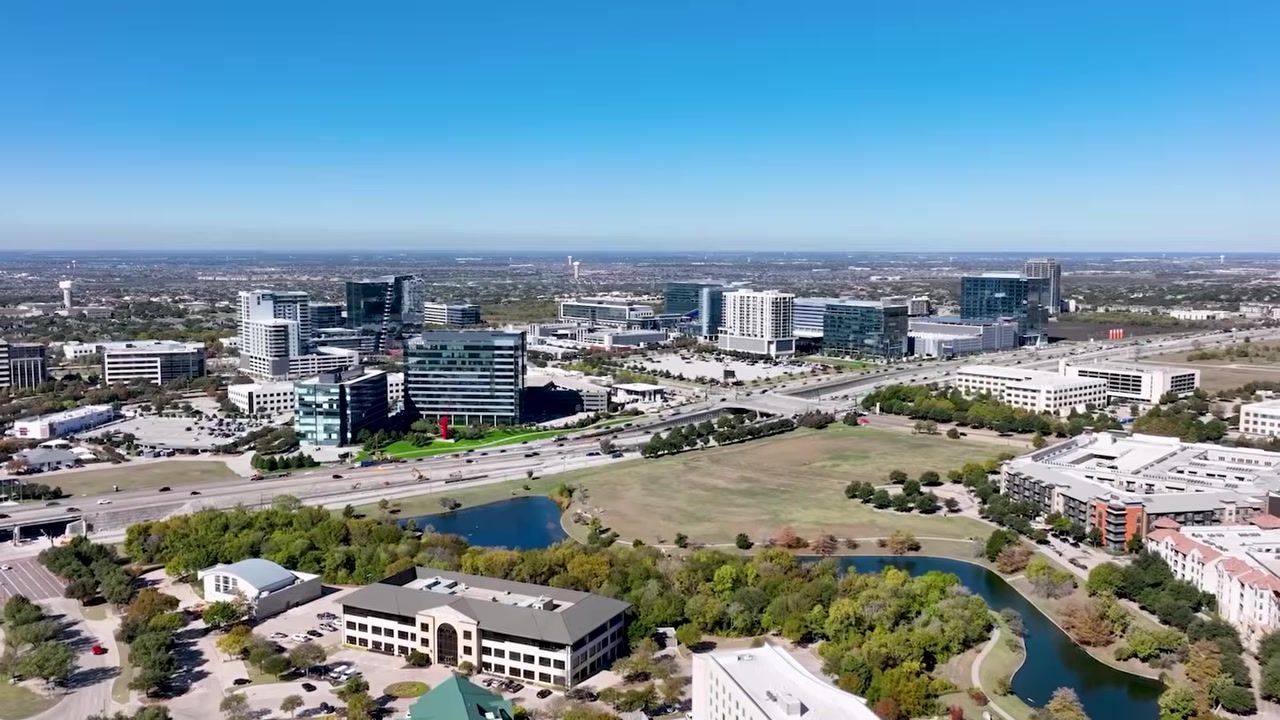
If you're moving here from out of state, the North Dallas Corridor is almost certainly already on your radar. This stretch running from Dallas north through Plano, Frisco, Prosper, Celina is one of the most active relocation zones in the entire country right now. Frisco is one of the top relocation destinations in the country, and there are real reasons for that.
When you look at what has come to this corridor, Legacy West in Plano, the Star (Cowboys headquarters), PGA Frisco, Fields, Universal Kids Resort, plus strong schools, new construction, master-planned communities with trails and pools and parks, and major corporate campuses nearby, you definitely see the appeal. For families moving from out of state who want suburban convenience, organized kids activities, and newer development, Frisco can feel like a genuinely natural fit. It has a feeling of being intentional, clean, full of life. It's newer, highly planned, very family-focused, and packed with amenities. That matters a lot when you're trying to build a new life somewhere.
But I want to give you the honest version too, because I think that serves you better than just a highlight reel. Frisco has a lot. Frisco is close to a lot of things in North Dallas. Those are two very different statements. Frisco is not close to Fort Worth. It's not close to Arlington, and it's sure not close to Love Field, not the way that Dallas proper is. You are not popping over to Bishop Arts or Deep Ellum on a Tuesday night without planning for it. You absolutely can go. People do it all the time. I've done it. But it's a planned outing. And in DFW, casual disappears quickly when it involves 40 miles.
If your work is in North Dallas, if your kids' activities are in North Dallas, if your friends are in North Dallas, if your weekends revolve around the Star, PGA Frisco, and Legacy West, Frisco might be an incredible choice for you. But if your heart is actually in Dallas every weekend, or you need to be near DFW Airport constantly, or your closest people are in Fort Worth, look at the map carefully before you commit to Frisco.
The Cowboys Example: Close to the Star, Not Close to Game Day
Let me give you one of my favorite examples because I think it really crystallizes everything I'm trying to say. The Cowboys world headquarters, the Star, is actually in Frisco . Practice facilities, restaurants, tours, events, the whole Cowboys brand experience, it is a beautiful complex. But the actual games are played at AT&T Stadium in Arlington. They're roughly 40 miles apart.
So someone moving to Frisco might think they're close to the Cowboys, and they are close to the Star, but they are not next door to game day. A trip to Arlington is traffic, parking, a whole planned evening. That may be fine for eight home games a year, but it's worth being honest about what close to the Cowboys actually means in your specific case. This is what I mean when I say Dallas is not one city. You can be close to one part of a lifestyle and still 40 minutes from another part of that same lifestyle.
Arlington is the mega event zone of the Metroplex: AT&T Stadium, Globe Life Field, Six Flags, Hurricane Harbor. It takes me 45 minutes to get to Globe Life Field from Frisco. Most people who enjoy those things do not live in Arlington just because of them. They drive there when the occasion calls for it. Depending on where you live, Arlington is either a manageable distance or a significant haul. If your family's constantly doing things in Arlington, if you are a season ticket holder, you love concerts, or have family on that side of the Metroplex, then living all the way in far north Dallas may start to feel frictiony and uncomfortable.
A lot of people who end up regretting a far north purchase are not people who made a bad financial decision. They're people who bought into the master-planned community dream, which is genuinely beautiful, but whose personality will always pull them back to the city. They're often driving 35 to 40 miles more often than they expected, and over time it wears on them. I'm not saying the suburbs are wrong. I work in the suburbs. I love what these communities offer. But they are not right for everyone. The best version of this decision is the one you make with complete honesty about how and where you actually want to live.
Plano: Established Convenience in the Corporate Corridor
Plano is established and convenient. This is a mature suburb with major corporate campuses: Toyota, JPMorgan Chase, Liberty Mutual, Capital One, and a ton of others. If you or your spouse work in the corporate corridor, Plano can be a genuinely natural fit. Strong roads, excellent shopping, great restaurants, and a level of daily convenience that's really hard to match.
If you are not specifically chasing brand new builds, Plano often gets overlooked because of that, but it shouldn't. Plano's maturity is one of the biggest advantages. You've got real trees, major roads, corporate campuses, strong shopping and dining, and daily convenience that's hard to beat. West Plano feels different than East Plano, and that matters when you're choosing the right pocket of the city.
Legacy West sits in Plano, and it's become a major retail and dining destination for the entire North Dallas corridor. The corporate presence here is significant, and if your daily life revolves around work in this area, Plano makes that commute manageable in a way that living further north simply can't match. The Mavericks and the Stars are both getting new locations, and one of them's in Plano. We're really excited about that.
The people who thrive in Plano are often the ones who value established infrastructure over the newest build. They want convenience, they want mature neighborhoods, and they want to be close to where they work without the friction of a long commute. If that sounds like you, Plano deserves serious consideration even if it's not the flashiest name on your list.
Prosper: The Sweet Spot Between Growth and Space
Prosper sits in a sweet spot for a lot of people. Still in that growth corridor, newer builds, stronger schools, but a little more breathing room and slightly less density than Frisco. If you want the North Dallas lifestyle with a bit more space, Prosper is often worth seriously looking at because you can get both of those there.
Prosper is still becoming what it will be, but it's far enough along that you're not pioneering. You've got established master-planned communities, good access to the Dallas North Tollway and 121, and you're still close enough to Frisco and Plano that you can tap into those amenities without living in the densest part of the corridor.
For buyers who want newer construction but feel like Frisco is too packed or too expensive, Prosper often becomes the natural next step. You're getting similar schools, similar community amenities, and you're still in the growth path of North Dallas. The trade-off is that you're a bit further from some of the marquee destinations, but for a lot of people, that extra space and slightly lower density is worth it.
Celina: More House, More Land, More Distance
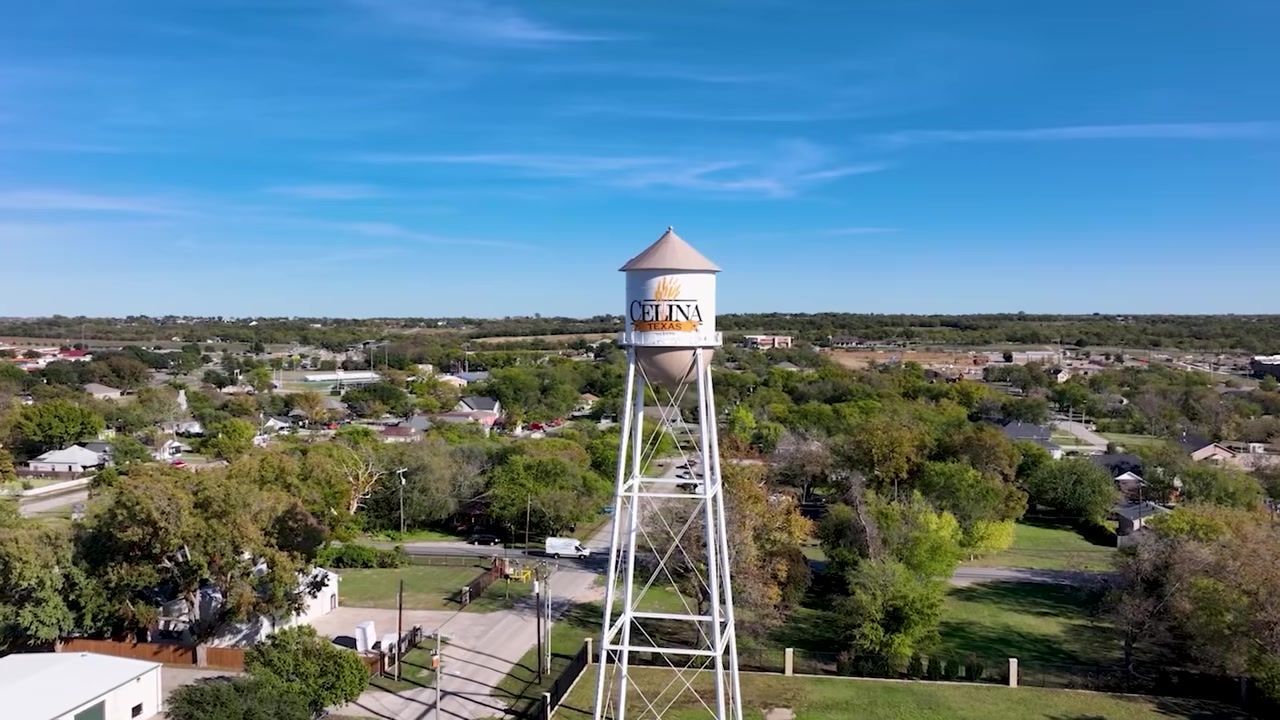
Celina is a growth play, more land, newer communities, price points that can be significantly more favorable than Frisco and Prosper. You can get more square footage and bigger lots here, and for people who want that breathing room and are excited about being part of an emerging area, Celina can be genuinely exciting.
But I always want people to be clear-eyed about the trade-offs. Celina is still becoming what it will be. It's far from DFW Airport. It's far from Dallas proper. The trade-off is often 40 miles from work, from the airport, from city activities. That example I gave earlier about the client who loved Celina but whose husband flew out of DFW twice a month with early flights? That distance became a real planning variable. If travel is significant, airport access is not a small detail.
This is where people get what I call house hypnotized. They say, but look at how much more house I can get in Celina. You can get more square footage, bigger lots, newer builds. But the question is not just how much house I can get. The question is, what am I trading for that house? Because sometimes the trade-off is 40 miles. Those 40 miles may not bother you today while you're scrolling from your couch, but they're going to show up every Monday morning, every airport trip, every time your kids have something across town.
The people who are happiest here are not always the ones who bought the biggest house they could find. They're the ones that bought the right location for their actual life. Quality of life matters. Celina can absolutely be the right choice, but only if you've honestly mapped out where your life will actually take place and you're okay with the distance.
McKinney: Character and a Downtown That Hasn't Sacrificed Its Identity
McKinney has something a lot of the newer suburbs do not, which is character. McKinney has one of the best downtowns in the nation. It's historic, it's got local restaurants, boutiques, and a genuinely rooted feel. It has grown significantly and it continues to grow, but it has not sacrificed its identity in that process.
For people who want the growth and opportunity of North Dallas but also want a sense of place, McKinney delivers something different. You're not just buying into a master-planned community. You're buying into a city that has its own story, its own downtown, its own character. That matters to a certain type of buyer, and if you're that person, McKinney will feel different from the first time you visit.
West McKinney feels different from far north McKinney near the edge of the Grove. Different parts of McKinney have very different access depending on where you are relative to 75 and the Dallas North Tollway. The city name matters, but the pocket matters too. That is where a good local strategy makes all the difference.
McKinney continues to grow significantly, and it's attracting people who want both the North Dallas corridor access and a city that feels like it has roots. If that combination appeals to you, McKinney is worth serious time and attention.
Grapevine: Underappreciated Central West Positioning
Grapevine and Southlake are underappreciated in the relocation conversation, and I want to give them their due. These communities sit closer to the Dallas-Fort Worth Airport, and that central west positioning is a real strategic advantage to the right person. They give you access to both sides of the Metroplex in a way that not many places can.
Grapevine has a historic feel, and it's centrally located. You're close to DFW Airport, 10 to 15 minutes on a good morning. You can reach Fort Worth, Dallas, Arlington, and the airport reasonably. If you want to be kind of in the suburb but yet really close to everything, Grapevine is a great choice.
If you travel frequently by plane, DFW access from here is some of the best in the Metroplex. If you have family in Fort Worth but work somewhere close to the Dallas side, this area helps you split that difference. The lifestyle here feels distinct from the newer build North Corridor. You've got the historic feel of Grapevine, more established luxury neighborhoods, and a genuine sense of place.
If you're exclusively focused on Frisco, Prosper, and Celina because it's what you keep seeing online, I would encourage you to at least understand what this side of the Metroplex offers. Sometimes the area that solves your problem is not the one getting the most attention. Sometimes it's the one that quietly makes your life easier.
Southlake: Airport Access and Established Luxury
Southlake shares that same central west positioning as Grapevine, and it deserves the same attention. You're close to DFW Airport, 10 to 15 minutes on a good morning. You can reach Fort Worth, Dallas, Arlington, and the airport reasonably. Southlake Town Square is a destination in itself, and the established luxury neighborhoods here have a different feel from the newer construction further north.
If you travel frequently by plane, DFW access from Southlake is some of the best in the Metroplex. If you have family in Fort Worth but work somewhere close to the Dallas side, Southlake helps you split that difference. The lifestyle here is distinct from the newer build North Corridor, and for people who value that established feel, airport proximity, and access to both sides of the Metroplex, Southlake can be exactly what they need.
Allen: Strong Schools and Multi-Directional Highway Access
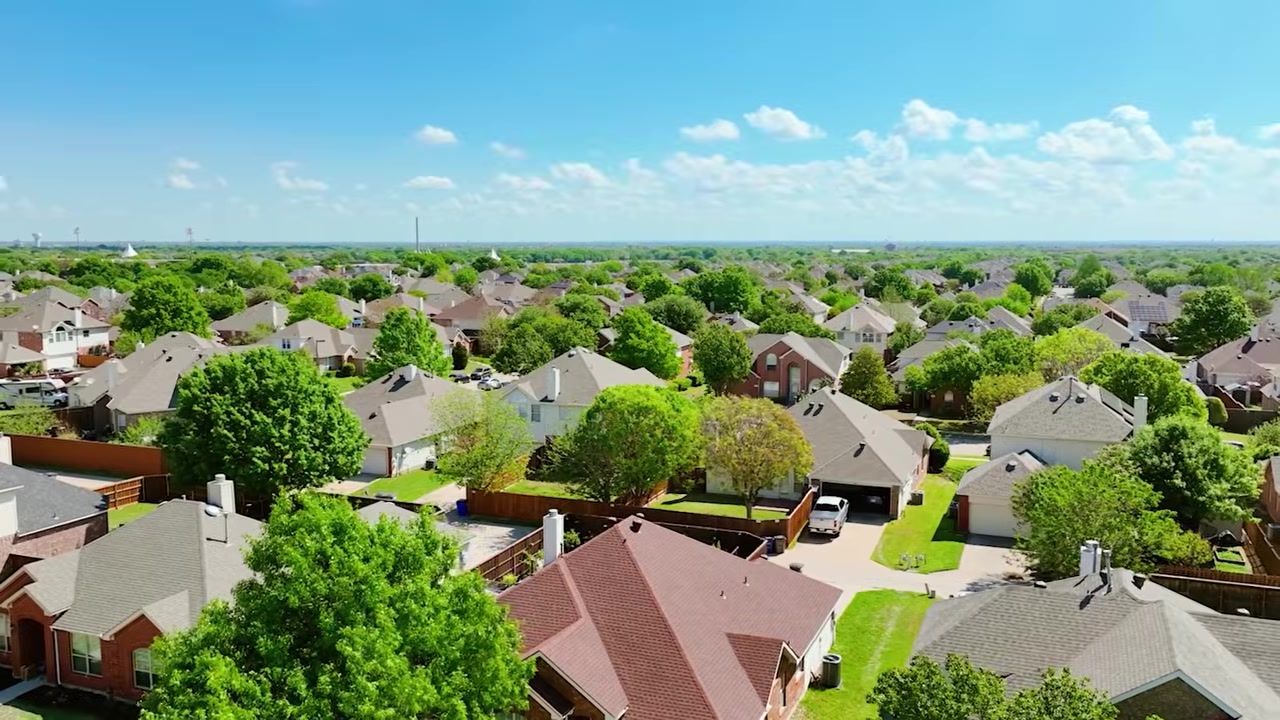
Allen has strong schools, great family neighborhoods, solid shopping, and often better value than comparable parts of Frisco. It has its own energy and a position relative to 75 and 121 that gives good access in multiple directions. You can get anywhere fast, and that matters when your daily life pulls you in more than one direction.
Different parts of Allen have very different access depending on whether your daily life revolves around 75 or 121. That positioning gives Allen a flexibility that some of the other North Dallas cities don't have. You're not locked into one highway or one direction. You've got options, and for people whose work, kids' activities, and social life are spread across the northern part of the Metroplex, Allen can make all of those pieces fit together more smoothly.
Allen often gets less attention than Frisco or Prosper, but for people who know the area, it's a genuinely strong option. You're getting strong schools, established neighborhoods, good shopping, and highway access that makes your daily life easier. If you're not chasing the newest build and you value convenience and flexibility, Allen deserves to be on your list.
Which Area Is Right for You: Mapping Your Actual Life
Before we get to the test, I want to pull back to the big picture for a moment. Moving to Dallas-Fort Worth is very exciting. It's a place with real opportunity for careers, for family, for financial growth. Almost every area I've talked about today is great for someone. But the reason people struggle with this decision is that they default to what is easiest to compare: the house. Bedrooms, bathrooms, square footage, lot size, price, photos. You can line up two houses and compare them in five minutes.
Lifestyle is harder to compare. You can't put it in a spreadsheet. But lifestyle is almost always what determines whether you're happy after you move. So before you go any further in your search, I want you to do one thing: map your Tuesday. Where will you work? Where will your spouse work? Where will your kids go to school or do their activities? Which airport matters to you? Where are your friends or family in the whole DFW area? Where do you genuinely enjoy spending time?
Do you want to access the Dallas energy, or are you perfectly happy building your whole life in a self-contained suburb? Do you want new construction or do you want established character? Do you want land or do you want convenience? Every single one of these answers pushes you toward a different part of the Metroplex, and that is why the right city is never the same for everyone, no matter what you see trending online.
Here's what I've observed over years of working with relocating families: most people use what's convenient. You go to the restaurants near you. Your kids play sports near you. Your friends become the people who are easy to see. Your weekend routine forms around your area. The things that are 40 minutes away, even the things you genuinely love, you visit far less often than you thought you would. If you choose a house 40 miles from what you actually care about, what usually happens is not that you keep making the drive. What usually happens is you stop doing those things, and one day you realize the life you pictured when you moved here is not the life you're actually living.
The 40-Mile Mistake Test: Five Questions Before You Buy
Before viewing homes, ask yourself these five questions:
Question 1: Where will you be on a normal Tuesday? Consider your commute, school drop-offs, kids' activities, and everyday errands. Test your potential location against your actual weekday routine, not just a relaxing weekend.
Question 2: Where will you spend your Friday nights? If you enjoy Dallas restaurants, nightlife, and entertainment, consider whether you're willing to make that drive regularly. If you prefer staying close to home, a self-contained suburb may be a better fit.
Question 3: Which airport will you use most? Consider whether you primarily fly through DFW or Love Field and how often you travel. Frequent flyers should prioritize convenient airport access.
Question 4: What are you willing to trade for the house? More space and land may mean longer commutes, while walkability and convenience may mean less space for your budget. Decide which trade-offs make sense for your lifestyle.
Question 5: Would you be happy with what's within 15 minutes of home? Think about nearby grocery stores, restaurants, schools, gyms, friends, and everyday activities. If your preferred lifestyle depends on places much farther away, reconsider whether the location is right for you.
Conclusion: Choose Your Life First, Then Choose the House
The people who truly love living here do not just pick a pretty house. They pick the right location for their actual life. They understand the map. They understand the trade-offs. They knew what they were optimizing for. Frisco, Plano, McKinney, Prosper, Celina, Grapevine, Southlake, Allen, all can be incredible. All of these places can be genuinely amazing for the right person, but they're not the same life. The right one is the one that matches yours.
Before you choose the house, choose the life. Map your Tuesday. Map your Friday night. Map your airport. Map your kids' activities. Map your real routine. Then find the house that supports all of that. And if you're planning to move to Dallas-Fort Worth and you want to work with someone who will help you think through all of this before you ever look at a single listing, I would love to talk with you. Call or text me at 214-903-4794 or book a FREE consultation here so we can map out your actual life and find the part of DFW that fits it. I'm not here to sell you the biggest house. I'm here to help you avoid the 40-mile mistake and find the location that makes your life better, not harder.
FAQ
How much do toll roads cost in Dallas-Fort Worth?
If you are commuting regularly on the Dallas North Tollway, 121, or George Bush Turnpike, you could easily spend $50 to $300 a month, sometimes more. Over a year, that's potentially $3,000 or more just to move around your own city. The exact amount depends on your route, how often you drive, and whether you can avoid tolls by using free highways like 75, which are often more crowded.
Is Frisco close to downtown Dallas?
Frisco is about 30 to 40 miles from downtown Dallas depending on which part of Frisco you're in. In good traffic, that can be 30 to 40 minutes. In rush hour, it can easily be over an hour. Frisco is close to a lot of things in North Dallas, but it is not close to downtown Dallas, Fort Worth, Arlington, or Love Field in a way that makes casual trips easy. If your life revolves around the city, Frisco may feel far.
Which Dallas suburb is best for frequent flyers?
Grapevine and Southlake have some of the best DFW Airport access in the Metroplex, 10 to 15 minutes on a good morning. Frisco is about 25 to 35 minutes from DFW depending on traffic. Celina and far north McKinney are significantly further. If you fly out of Love Field, East Dallas, Preston Hollow, or closer-in neighborhoods are your best bet. If you travel frequently for work, airport access is not a small detail.
What is the 40-mile mistake?
The 40-mile mistake is when you buy a house that looks perfect but is 40 miles from your actual life: your job, the airport you use, your kids' activities, the restaurants you like, the friends you want to see. In Dallas-Fort Worth, 40 miles can be an hour and a half in traffic and hundreds of dollars a month in tolls. Most people do not realize they've made this mistake until after they've closed and tried the commute a few times.
Should I live in Plano or Frisco?
It depends on what you value. Frisco is newer, highly planned, packed with amenities like the Star and PGA Frisco, and feels very family-focused. Plano is more established with mature trees, major corporate campuses, excellent shopping and dining, and daily convenience that's hard to match. If you work in the corporate corridor (Toyota, JPMorgan Chase, Liberty Mutual), Plano can be a natural fit. If you want the newest builds and master-planned communities, Frisco may be your answer. Both are strong choices for different reasons.
Is Celina too far from Dallas?
Celina is about 40 miles from downtown Dallas and significantly further from DFW Airport. If your work, your airport, and your social life are in Dallas or the corporate corridor, Celina can feel far. If you're okay with that distance and you want more land, bigger lots, and better price points, Celina can be a great choice. The key is being honest about where your life will actually take place and whether you're willing to make that drive regularly.

Helping You Find Your Place in Dallas–Fort Worth
We’re your local real estate team helping buyers, sellers, and relocating clients navigate the Dallas–Fort Worth market. From community comparisons and new construction to luxury homes and investments, we combine firsthand local knowledge with dedicated support to make every move clear and informed.