
The Hidden Costs of Living in Dallas-Fort Worth, Texas
Everyone says Texas is cheaper, no state income tax, more housing for your money. That's true. But there's a money pit that shows up after you move in: the $300 homecoming mums, the drill team fees, the insurance deductible that's a percentage of your home's value instead of a flat number you can plan for. I need you to hear this before you pick a house, because the scary part is most people do not even realize they've made these budget mistakes until after they've already closed. I don't want that to be you.
I'm Tiffany Caballero, and I've lived in the Dallas- Fort Worth area my entire life. Today I'm walking you through all of it, the school traditions, the homeowner surprises, the move-in costs that don't show up on a listing, and the lifestyle expenses that make living here what it is. If you're relocating to Dallas , Frisco , Prosper , McKinney , Plano , or anywhere in the metroplex, this is your real-number guide to what it actually costs to maintain your lifestyle in North Texas.
Let's get going.
Table of Contents
- School and Kid Traditions: Mums, Friday Night Lights, and More
- Activities That Add Up: Drill Team, Cheer, Band, and Club Sports
- Summer Camps and Senior Year Costs
- Homeowner Money and Surprises: Exemptions, Taxes, and Insurance
- Foundation Watering, Pest Control, and Texas-Specific Home Maintenance
- Move-In Costs Nobody Budgets For
- Lifestyle Traditions: What You'll Love (and What They Cost)
- Which Budget Surprises Should You Prepare For?
- Conclusion
School and Kid Traditions: Mums, Friday Night Lights, and More
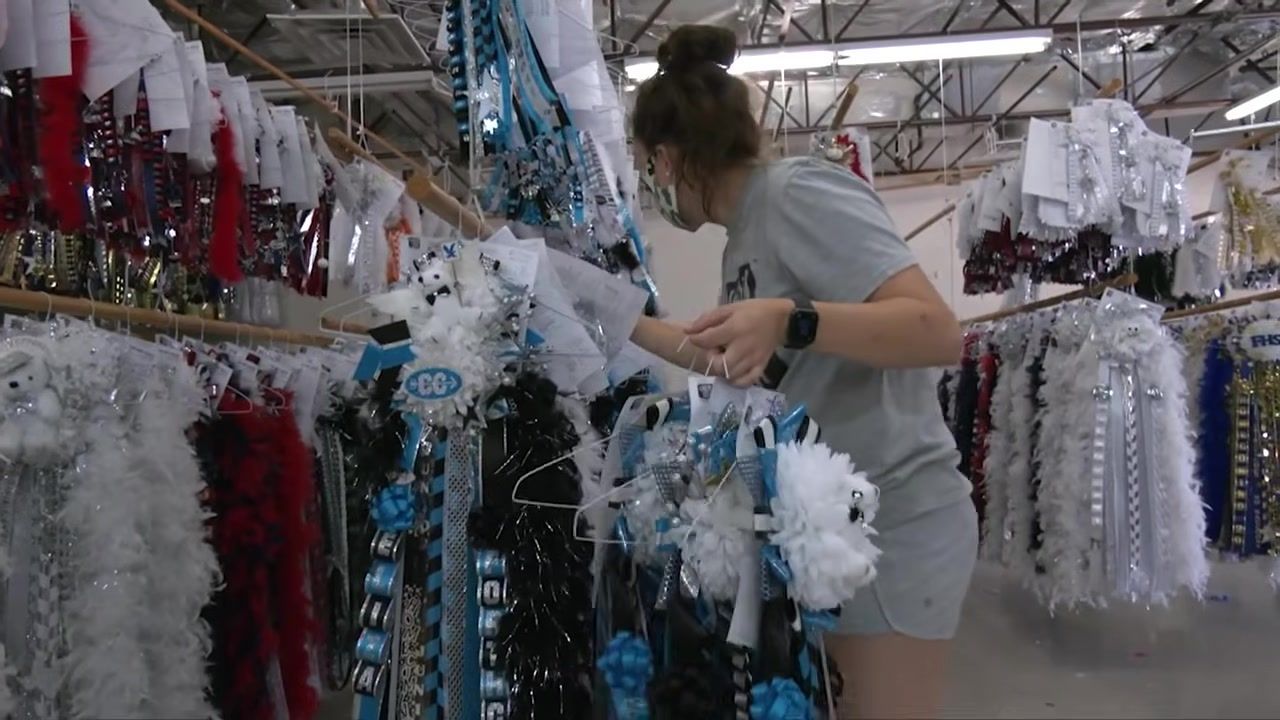
If you're moving to Dallas with children, this is the part of the budget that really comes first. Let's start with homecoming mums. If you've never seen a mum, it is a giant ribbon corsage covered in bells, trinkets, lights, and sometimes even stuffed animals. The girls wear the mums, and they're so big that they literally have to put them around their neck at this point in time. When I was growing up, they were small and they pinned right here. The boys wear garters on their arm.
The first time I saw a senior mum this year, I honestly thought it was a costume. It's not. It's a tradition, and your kids will notice who has the biggest. A simple mum can be under $100. A senior mum can run several hundred dollars. A lot of families go the DIY route, and that's great, but those craft store runs can really add up fast as well.
Then there's Friday Night Lights. High school football here is not just a game, it is a lifestyle. You're looking at season tickets, booster club dues, spirit wear, and yard signs. Everybody's got a yard sign. Some of these high school stadiums are nicer than college stadiums. In the fall, Friday nights are spoken for. Literally plan your social calendar around it. Plus, it's just a lot of fun.
Activities That Add Up: Drill Team, Cheer, Band, and Club Sports
This is where the real money is. Drill team in Texas is serious. If you're not from here, think of it as a mix of dance team and military precision with the hats, the white boots, the kick lines at halftime. These girls practice early in the morning, they compete, they go to summer camp, and the whole family gets pulled in. Between uniforms, camps, competitions, choreography fees, and travel, it can reach up to thousands of dollars a year.
Cheer is actually really similar. School cheer, all-star cheer, competition cheer all come with their own uniforms, their own bows, camps, competition fees. Band is a bigger commitment here than a lot of families expect. Marching band in Texas competes, travels, and practices in the August heat. Between buying or renting an instrument, private lessons, uniforms, trip fees, it starts to add up.
Then there's club and select sports. You've got soccer, volleyball, basketball, baseball, and softball. In a lot of the communities we work in, the school team is only one part of it. Kids play select or club ball often year-round with travel. My own niece is on a travel soccer team and she's been to California, Florida, all the things, and it really adds up. You're not just paying for the club fee, you're paying for hotels, gas, meals, and tournament entry fees on the weekends.
I've had families tell me their youth sport budget is bigger than their grocery budget, and they weren't joking. My best tip here is simple: before tryouts, ask other parents in the program what they are actually spending in a year, not the posted fee, the real number with travel and extras included. The posted fee is rarely the full picture. Most parents are happy to tell you because a lot of people don't gatekeep here.
Summer Camps and Senior Year Costs
In a lot of Texas school districts, school lets out in late May and starts back in mid-August. That is a long summer, and it's a hot one. Kids can't just play outside all day in July here, so a lot of families lean big time on summer camps, sports camps, and day programs. Those weekly camp fees add up really fast, especially when there's more than one child. If both parents work, put summer child care in your budget before you move, not after school lets out.
Then there are smaller things that sneak up on you: spirit wear for every season, class parties, teachers' gifts, school fundraisers, booster club dues for every activity your kid's in. None of these are big on their own, but over a full school year, they add up to real money.
Senior year here has a definite price tag. You've got painting senior parking spot where seniors pay to paint their own space in the school parking lot, and they get really creative. It's a lot of fun, I'm not going to deny that. I just want you to know about it. There are senior sunrise and senior sunset events. There are letterman jackets with all the patches, senior pictures, and the senior mum that we already talked about. Prom alone can rival a small wedding with the dress or the tux, the hair, the makeup, the dinner, photos, and sometimes a party bus. Senior year here is a whole season, not just a graduation day. My advice is to start setting money aside junior year.
If your kid's friends celebrate quinceañera, you can expect invitations. You've got gifts and sometimes a spot on the court. A quinceañera celebrates a girl turning 15, and in Texas these can be big, beautiful events. If your son or daughter is asked to be part of that court, it's an honor, and it usually comes with a rehearsal, a dress, a tux, and some type of coordination. It's a beautiful tradition and a big part of the community here, so lean into it.
Homeowner Money and Surprises: Exemptions, Taxes, and Insurance
Most of the families we work with are moving to Dallas from out of state, and these are the questions they ask us after they're already moved in. This is where we really earn our keep because a lot of these costs never show up on a listing. Two of these will save you money. The rest can cost you if you aren't ready for them.
First, file your homestead exemption. It's free and it lowers your taxable value on your primary residence. You can only do it for one home in any given area in Texas, and it has to be the home that matches your driver's license. It's not for investors. For school district tax alone, the exemption is now $140,000 off your home's value after Texas voters approved the increase in 2025. It got way better.
Here's the part that a lot of people miss: once you have a homestead exemption, the appraised value used for your taxes can only go up 10% a year. So no matter how fast the market moves, you are protected by that 10% rule. Transplants forget to file this all the time. Once you close, file it within your county appraisal district. It takes a few minutes online. You can do it yourself. It is free. It's the easiest money you'll ever save in Texas. Please don't leave it on the table.
Second, protest your property taxes. Every spring appraisal notices go out and a lot of people protest their value. It's completely normal here. Your county appraisal district puts a value on your home, and if you think it's too high, you have the right to push back. You have to produce proof, which I can help you with if you are my clients. You can do it yourself using recent sales in your neighborhoods, or you can hire a firm that's going to take a percentage of whatever they save you. Where you come from, protesting your taxes might sound dramatic. Here, it's just what we happen to do in April.
Next, read your insurance deductible. Here, wind and hail deductibles are often 1 or 2% of your dwelling coverage, not a flat $1,000 or $5,000. Home insured at $600,000, a 2% deductible is $12,000 out of your pocket per claim. We get hit by wind and hail every single year. It is not an if, it is a when. It doesn't mean that you are going to have damage every single year. I just want you guys to be aware that Texas weather is real and it happens every year.
A spring storm can roll through and the next week you're going to see roofers in every neighborhood trying to look at roofs. When you're buying, ask how old the roof is, when was it replaced, and whether there's been any prior hail damage. A good inspector is going to jump up on your roof. A Class 4 impact-resistant roof can earn you an insurance discount as well. Ask your insurance agent about it and read your policy before hail season, not after. Know what you're dealing with.
Foundation Watering, Pest Control, and Texas-Specific Home Maintenance
This next one sounds strange if you're not from here. In Texas, you have to water your foundation, and I'm serious. A lot of Dallas-Fort Worth sits on expansive clay soil. When it gets wet, it swells. When it dries out, it shrinks. Most homes here are built on a concrete slab sitting right on top of that soil. When the ground keeps expanding and contracting all year, your foundation can move a little bit. The goal is to keep the moisture around your house pretty consistent.
That's why you'll see soaker hoses running around the base of a home here a little bit away from the foundation, especially in the hottest, driest stretches of our summer. You'll see gutters that should carry water away from the house, and your yard should drain away from the foundation, not towards it. A lot of new construction in Dallas is including a drip line underneath the soil in the sprinkler system so that you can run it automatically. For example, my sprinkler system in the summer months is set to a 30-minute drip 3 days a week because it gets super hot and you need to keep that soil moisturized.
You also don't want super huge trees close to the house. It can pull that moisture out of the soil too. What are the warning signs? Cracks in the drywall, especially around doors and windows. Doors that get stuck when you're trying to open and close them, or maybe they won't latch anymore. Cracks in the bricks, gaps around the window frames. If you're buying a resale home, it's really important to pay attention to all of that.
I have a brand new house and I have cracking in it, but it ebbs and flows because the foundation moves. I might have a hairline crack and some caulking where my cabinets meet the wall, but 4 months later it's not going to be there anymore because it will have closed back up. Your house does have room to breathe. A tiny hairline crack doesn't mean your house is falling down, but big cracks above the doorways, in the brick, all things that I can share with you as we're looking for homes. Foundation repairs can cost thousands and sometimes even more. This is one of those things you want to know before you close, not after.
Freeze Prep and AC Maintenance
Since I've lived here my whole life, we have always had outdoor faucet covers and pipe insulation, and we know where the water shutoff is. Some families even decide to add generators. We do get freezes, they just don't stay frozen. But when it does freeze, the whole area shuts down, so you need to be ready for it. We do things like if it gets down below freezing, we will drip tiny drips in our sinks and open up all of our cabinets so the warm air can circulate in down under the pipes. We cover our outdoor faucets. A lot of transplants don't know how to handle cold weather here.
Your air conditioner runs hard from about May through September, and some years even longer. We had an incredibly hot summer this year. We had 67 straight days of no rain with triple digits, so it was very hard on our plants. A lot of plants died. ACs ran consistently because it just stayed hot here. When you're buying, ask how old the system is. Get it serviced every spring before the heat hits. There are AC companies that you can get on a monthly membership, and it will include every fall and every spring doing a tune-up. When it is time to replace an AC system, it can be really expensive. Your summer electric bill will tell you everything you know about the efficiency of your system and really the efficiency of your home.
Pest Control
While we're on things that sound strange, let's talk about pest control, because here it's not optional. Texas is warm most of the year, and bugs love that just as much as we do. First, let's talk about termites. Subterranean termites are really common in Texas. Doesn't mean you're going to get them, but they are there, and they work really quietly. By the time you see any damage, it's often already going to be a little bit expensive. Termite damage usually isn't covered by homeowner's insurance. That's why I always want a termite inspection during a purchase, and why a lot of homeowners decide to put termite protection on their home year after year.
Then there are fire ants. If you've ever met a fire ant, you're gonna know. They build mounds in your yard, especially after it rains, and their sting is literally no joke, especially for kids and pets. Fire ants are also known for getting into AC units and electrical boxes where they can cause some damage. Treating your yard isn't just about comfort, it protects your equipment.
Scorpions are next. Yes, we have scorpions in North Texas. The ones you'll usually see are small and they like to come inside, especially in newer neighborhoods where the land was recently cleared. A sting is painful but not dangerous for healthy adults, but nobody wants to find one in their shoe. Regular treatment around the outside of your house makes a big difference. Along with the big spiders, I found the biggest wolf spider in my house. I literally freaked out because I hate spiders, but it was about the size of half my palm. I actually decided to treat my house every month. Usually pest control is every quarter, so just know you have options there too.
Then there are mosquitoes. Our summers are long and warm, so mosquito season is long as well, and a lot of families add mosquito treatment for the yard so they can actually enjoy the backyard they paid for. You can also buy plants that are natural mosquito deterrents, and then you can get the little candles that you can put on your back porch that are citronella.
When you're budgeting for your home, add a regular pest control service. Most homeowners here have one. It's not glamorous, but it protects your house, your equipment, and your family, and it's a lot cheaper than fixing the damage later.
Sprinklers, Pools, and Watering Rules
Between watering your yard and watering your foundation, your water bill here works harder than you might expect. You've got irrigation repairs, pool maintenance is a real line item in your budget if you have a pool. Many cities also set watering schedules. We were definitely on a schedule this summer because we went into drought since we didn't have any rain. You can find that on your city's website. If you don't follow them, the city can fine you.
Move-In Costs Nobody Budgets For
These are the ones that can catch people off guard because they don't show up until after you've unpacked. First, your car. When you move to Texas, you have 30 days to register your vehicle and 90 days to get your Texas driver's license. If you're bringing a car from out of state, expect a new residence fee when you register. Texas got rid of annual safety inspections for most personal vehicles in 2025, but if you live in Collin, Dallas, Denton, or Tarrant County, your car still needs an emissions test. Book your driver's license appointment early because those appointments can fill up.
Next, you got electricity. In a lot of Dallas-Fort Worth , you actually get to choose your electrical provider, and there's a lot of options, which helps with price gouging. Then we also have co-ops. I'm on a co-op, so I don't get to choose. Denton County, Frisco is a set price. Some of the advertised rates look great until you read the fine print and realize that price depends on how much power you use. Read the plan details, look at how the pricing works, pick the plan that fits how your household actually uses electricity. Budget for deposits and setup fees, because if you don't have a credit history with a provider, they may ask for a deposit up front, but you will get it back once you don't live there anymore.
Then there are toll roads: the Dallas North Tollway, the Sam Rayburn Tollway, the George Bush Turnpike. Depending on where you live and work, these become parts of your daily drive. You want to get a toll tag as soon as you move. You pay a lower rate than you would with a mailed bill. These little charges don't feel like much until you add up a full month of commuting or driving around the metroplex.
Then there's what comes attached to the house. A lot of the newer communities have HOA dues, and some of them have PIDs or MUDs, which is extra taxation. Special districts that help pay for the roads, the water, the sewer, and the amenities in a new development, and they show up on your tax bill or as an annual assessment with your property tax. Two homes at the same price can have very different monthly payments because of the MUD or the PID, because of all of these extra payments. When we compare homes for our clients, we always look at the full tax rate and every fee attached, not just the list price.
If you're buying new construction in Frisco or anywhere in the metroplex, there's one more thing. Your first tax bill may be based on a partially built home or just the lot. Once the home is fully assessed, that number can go up. Ask what the taxes will look like on the finished home, not just the first year's bill. That one can surprise a lot of people and really affect your monthly payment. I have heard horror stories of people not realizing it, and then it just trashed their budget.
Lifestyle Traditions: What You'll Love (and What They Cost)
These are the traditions people love most about living in Dallas , but they still come with a cost. Let's start with Christmas. In a lot of Dallas-Fort Worth neighborhoods, hiring a crew to hang your Christmas lights is completely normal. They put them up after Thanksgiving and take them down after New Year's, and some even store them for you, which is what I have. I pay every year, they come, they put it up, they take them down and they store them for me for the next year, and it's just super easy. It can run you anywhere from several hundred to a few thousand dollars depending on the size of your home, but you'll drive through these neighborhoods in December and completely understand it. It's beautiful and it's a total line item.
Then there's the State Fair of Texas, and it runs every fall at Fair Park in Dallas, and it's a big deal here. It's huge. Between admission, Fletcher's corn dog (which you have to get), fried everything, and food coupons, it adds up fast. Then of course Texas OU Weekend turns into a whole event. You need to go at least once. I have a friend that has 5 kids and he said that it ran him about $1,000 to take all the kids and do all of the things. Just bring more than you think you'll need.
Next, pools and swimming lessons. Summers here are long and hot, so a pool stops feeling like a luxury and starts feeling like a necessity. If you have your own pool, budget for maintenance, chemicals, and that extra water and electricity. I remember my first rental property when I was a lot younger, and it had a pool. One of the months I lived there, I think it was like June, my water bill was $500. This was, gosh, 15, 20 years ago. You have to run water in your pool almost every single day to keep the levels high because of evaporation. Doesn't happen year-round, but those summer months are really hard on evaporation for the water of your pool. If you don't have a pool, budget for a neighborhood pool access or a swim club or a gym with a pool. With that much water around, swim lessons for the kids are pretty much a must.
Then there's game day. The Cowboys, the Rangers, the Mavericks, the Stars, FC Dallas, and here in Frisco , the Rough Riders. Sports are a part of life here, and between tickets, parking, concessions, outings add up pretty quickly. Even if you're not a big sports fan, you'll get invited and you'll want to go to at least experience it.
Bluebonnet photos are a staple here and they're free, but every spring they're practically mandatory. Families pull over on the side of the road, set the kids in the flowers and take pictures. This is the one Texas tradition that costs you nothing but a Saturday morning.
Another win is sales tax holiday in August. The back-to-school sales tax holiday covers clothing, shoes, and school supplies. In the spring, there are weekends for Energy Star appliances and water efficiency products. If you just moved into a new house and you need a washer, a dryer, a new refrigerator, that matters. Plan your back-to-school shopping and your appliance upgrades around those weekends because those savings are real.
Which Budget Surprises Should You Prepare For?
When you're moving to Dallas-Fort Worth , budget for the life here, not just the house. Here's what to prioritize:
- If you have kids , plan for the activities, the summers, and the senior year. Ask other parents what they actually spend before tryouts. Set money aside junior year for senior expenses.
- Protect yourself as a homeowner by filing your homestead exemption, protesting your taxes, and reading your insurance deductible. Know your wind and hail coverage before storm season.
- In your first few months , get your car registered, pick the right electricity plan, and get your toll tag. Look at the full tax rate and every fee attached when comparing homes.
- Enjoy the traditions because they're a big part of why people live here. The mums, the Friday nights, the state fair, the bluebonnets, none of this is meant to scare you off. It's meant to help you walk in prepared so the life you build here feels good, not stressful.
Texas has a way of welcoming you in, mums and Friday Night Lights and all.
Conclusion
The biggest mistake I see people make when relocating to Dallas is budgeting for the house but not the life. The scary part is most people do not even realize they've made it until after they've already closed. I don't want that to be you. When you know what to expect, the homestead exemption you need to file, the foundation you need to water, the summer camps and senior year costs, the toll roads and the MUDs, you can plan for it. You can enjoy it. You can build the life you came here for.
We're grateful every day that we get to help families find their place here. If you're planning a move anywhere in Dallas-Fort Worth , I'd love to help you think through the real cost of living in each area. Let's get on a call or set up a Zoom so I can walk you through what your budget actually needs to look like based on where you're considering and what matters to your household. Call or text me at 214-903-4794 or book a FREE consultation here.
FAQ
What is a homecoming mum and how much does it cost?
A homecoming mum is a giant ribbon corsage covered in bells, trinkets, lights, and sometimes stuffed animals that girls wear around their neck for homecoming. Boys wear garters on their arm. A simple mum can be under $100, but a senior mum can run several hundred dollars. A lot of families go the DIY route, but craft store runs add up fast.
Do I really have to water my foundation in Texas?
Yes. A lot of Dallas-Fort Worth sits on expansive clay soil that swells when wet and shrinks when dry. Most homes are built on a concrete slab sitting right on top of that soil. To keep your foundation stable, you need to keep the moisture around your house consistent, especially in the hottest, driest stretches of summer. Many newer homes include a drip line in the sprinkler system for this.
What is a homestead exemption and how do I file it?
A homestead exemption is free and lowers your taxable value on your primary residence. For school district tax alone, the exemption is now $140,000 off your home's value. Once you have it, your appraised value can only go up 10% a year. You file it online with your county appraisal district after you close. It takes a few minutes and it's the easiest money you'll ever save in Texas.
How much do club sports and activities cost in Dallas?
Between drill team, cheer, band, and club sports like soccer, volleyball, and baseball, costs can reach thousands of dollars a year per child. You're not just paying the posted club fee, you're paying for uniforms, camps, competitions, choreography, travel, hotels, gas, meals, and tournament entry fees. Ask other parents in the program what they actually spend in a year before tryouts.
What are PIDs and MUDs and how do they affect my monthly payment?
PIDs and MUDs are special districts that help pay for roads, water, sewer, and amenities in a new development. They show up on your tax bill or as an annual assessment with your property tax. Two homes at the same price can have very different monthly payments because of these fees. Always look at the full tax rate and every fee attached, not just the list price.
Is pest control really necessary in Texas?
Yes. Texas is warm most of the year, and that means termites, fire ants, scorpions, spiders, and mosquitoes. Termite damage usually isn't covered by homeowner's insurance. Fire ants can get into AC units and electrical boxes and cause damage. Most homeowners here have a regular pest control service. It's not glamorous, but it protects your house, your equipment, and your family, and it's a lot cheaper than fixing the damage later.

Helping You Find Your Place in Dallas–Fort Worth
We’re your local real estate team helping buyers, sellers, and relocating clients navigate the Dallas–Fort Worth market. From community comparisons and new construction to luxury homes and investments, we combine firsthand local knowledge with dedicated support to make every move clear and informed.